

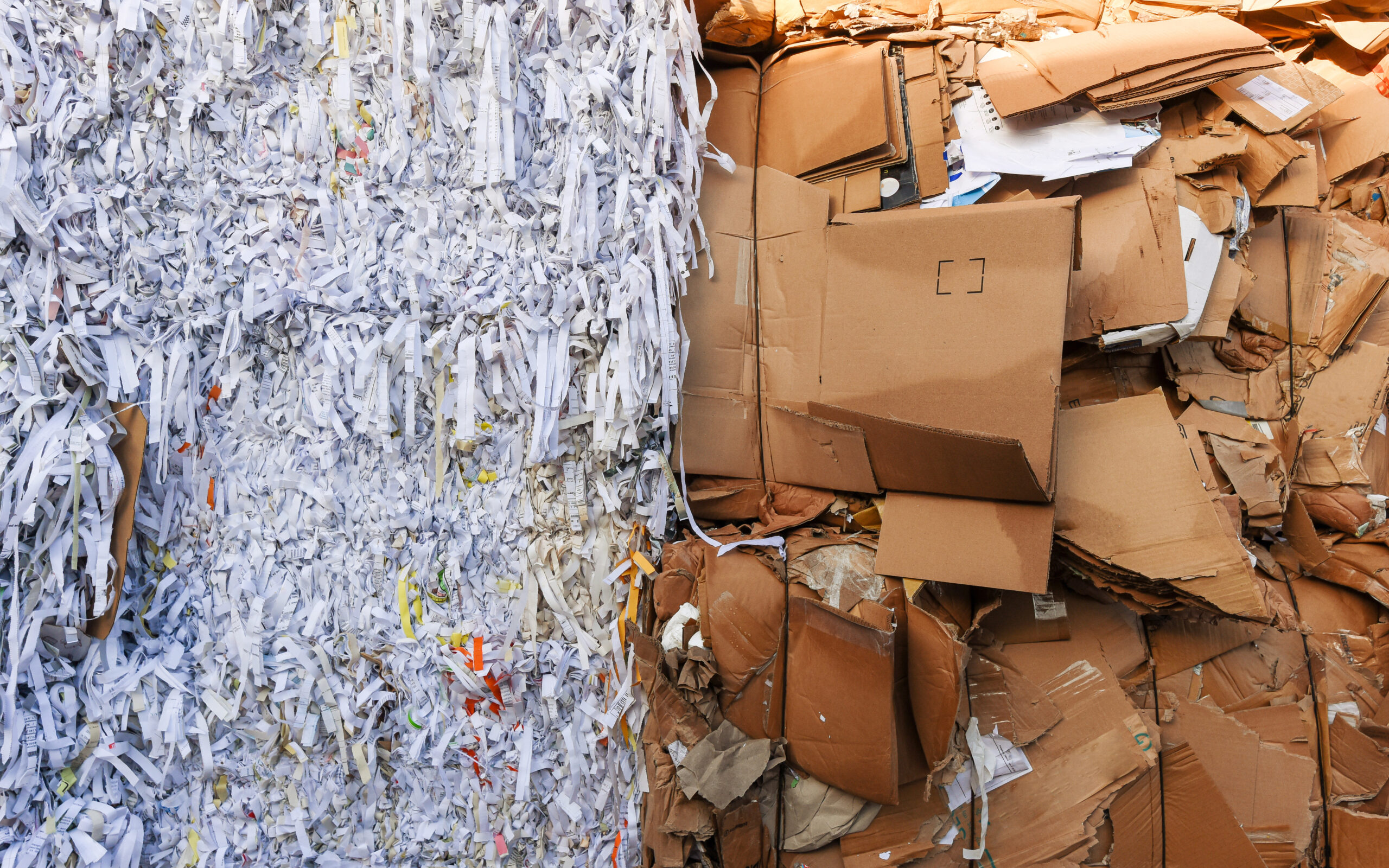
 Depending on your point of view paper, card stock and cardboard can either be a nuisance or an opportunity. When talking about paper recycling we need to use the industry terms of non-durable goods (office paper, newspaper, paper cups, etc.). The other primary classification is old corrugated containers (OCC), usually used for shipping and also referred to as durable goods for recycling purposes. Paper goods are one of the most successful recycling stories about re-use of municipal solid waste (MSW). The recycle rates in 2021, the most recent data available, were 68% for papers and 91.4% for OCC. In large part, this is attributable to the fact that about 80% of U.S. paper mills use some recycled material and about one third use 100% recycled material as feedstock to produce post-consumer paper. Paper is unique in that the process for making paper from virgin material is virtually identical to that of processing used material. Once the incoming material has been reduced to a pulp stage it follows roughly the same manufacturing steps regardless of the original source material. All of this is generally good news for the environment, though the demands of a high recycle rate also carry some associated risks.
 The key indicator to watch is the producer price index for woodpulp (Ref. link: Woodpulp PPI ) Starting in late 2021 the price had been stable for about a year at an index value of around 140. Then it started to move up as the combined effects of the market were starting to take hold. The PPI started climbing fairly steeply until early 2023 where it topped out at just under 270. Since then it has slowly eased off and is hanging around just above 210 as of this writing.
